Moving From Skilled to Specialist
There’s a meaningful difference between a teacher who’s genuinely good at breathwork and one who’s recognized as a specialist in it. That distinction usually requires the kind of sustained, immersive study that only comes with significant hours of dedicated training — enough time to not just learn techniques, but to internalize them so deeply that teaching becomes second nature.
At this level, students are working toward a level of mastery that goes well beyond what shorter courses can offer, both in technical range and depth of understanding.
What This Volume of Training Makes Possible
With this many hours to work with, programs can go deep into rarely-taught advanced techniques, extensive study of classical texts in their original context, and serious exploration of how pranayama intersects with meditation, energy work, and therapeutic applications. There’s also room for extended personal practice, which matters enormously for a teacher’s own credibility and embodied understanding.
Anatomy and physiology study becomes genuinely comprehensive too, often approaching the depth you’d find in more clinically-oriented programs.
The Personal Transformation Alongside the Professional One
Spending this much sustained time with breathwork inevitably changes the practitioner, not just the teacher. Many students describe significant shifts in their own mental clarity, emotional regulation, and physical health over the course of training — changes that then naturally inform how they teach, because they’re speaking from lived experience rather than secondhand knowledge.
This personal depth is often what separates a truly compelling teacher from one who’s simply technically competent.
Refining a Distinct Teaching Style
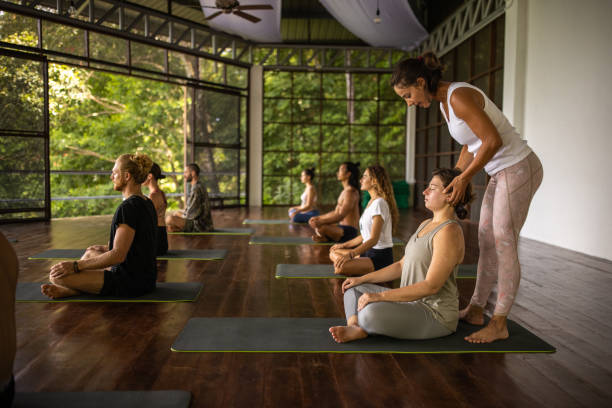
By this stage, students aren’t just learning to replicate a curriculum — they’re developing their own teaching voice, informed by everything they’ve studied and practiced. Mentorship from experienced lead teachers plays a huge role here, offering detailed feedback that helps refine pacing, language, and presence in ways that are difficult to develop alone.
Extensive supervised teaching practice, often across varied group sizes and student populations, rounds out this development into genuine, adaptable skill.
What Doors This Level Opens
Graduates at this tier are typically qualified to lead advanced workshops and retreats, train other teachers, and build a genuine professional identity around breathwork specifically. Many go on to write, speak, or create their own specialized programs, using this training as the credible foundation behind their work.
It also positions graduates well for collaboration with wellness centers, therapeutic practices, and other professionals looking for a genuinely qualified breathwork specialist.
Choosing a Program Worthy of This Investment
A commitment this significant deserves careful research. Look for lead instructors with deep, demonstrable mastery, a well-rounded curriculum that balances classical and modern understanding, and a strong track record of graduates who’ve gone on to teach successfully.
Adwait Yoga’s 300 hour Pranayama Teacher Training is built for exactly this kind of serious, transformative study, giving dedicated students the depth and mentorship this level of training demands.
Handling Skepticism From Traditional Students
Not every student walks in already convinced that breathwork deserves this much attention. Some are there mainly for the physical practice and view pranayama as a minor add-on. Experienced teachers at this level learn to introduce advanced concepts gradually, letting skeptical students experience the effects firsthand rather than trying to convince them through explanation alone.
This patient, experiential approach tends to win over even the most hesitant students far more effectively than any amount of philosophical argument, and it’s a teaching skill this level of training deliberately helps develop.
The Role of Personal Practice
No amount of theoretical study substitutes for a sustained personal practice, and this level of training makes that especially clear. Students are typically expected to maintain daily pranayama practice throughout the course, not just attend lectures and demonstrations, since teaching credibly requires having genuinely lived through the techniques yourself.
This personal discipline often continues well past graduation too, since teachers who stop practicing tend to lose the nuanced, embodied understanding that made their teaching compelling in the first place. The best specialists treat their own daily practice as a non-negotiable part of staying qualified to teach at this level.
The Mentorship Factor
At this depth of study, the quality of your mentors matters as much as the curriculum itself. Advanced breathwork can bring up strong physical and emotional responses, and having an experienced teacher who can recognize the difference between a normal intensive reaction and a genuine problem is essential for both safety and the depth of your learning.
Look for a 300 hour Pranayama Teacher Training where lead teachers are genuinely accessible throughout the course, not distant figures who appear only for scheduled lectures. Small group sizes tend to make this kind of close mentorship possible, allowing instructors to notice individual struggles and adjust their guidance accordingly rather than applying a one-size-fits-all approach to a large room of students.
Many graduates describe their relationship with a lead mentor from this stage of training as one that continues well past graduation, providing ongoing guidance as they establish themselves professionally in this specialty.
For Those Committed to True Mastery
A 300 hour Pranayama Teacher Training isn’t a casual undertaking, and it isn’t meant to be. For teachers genuinely committed to breathwork as their life’s work, it offers the depth, mentorship, and personal transformation needed to teach from a place of real, embodied mastery.